Pages

Monday, 8 June 2020

Covid-19 and the Limits of Pakistan's Fractured Welfare System

By: Kabeer Dawani and Rehan Rafay Jamil

A beneficiary of the Benazir Income Support Programme receiving her quarterly disbursement. Photo Credit: Rehan Jamil

Poverty in Pakistan may more than double, from 23% to 57%, as a result of the Covid-19 shock, according to one estimate from the Pakistan Institute of Development Economics. This is a dire picture and has the potential to undo much of the progress in poverty reduction that has occurred in Pakistan, particularly over the past two decades, unless urgent action is taken by the federal government.

The lockdown versus livelihoods false binary that has been the primary focus of much public discussion in Pakistan has missed the larger and more urgent picture. The virus is here to stay, at least for a year and probably longer until a vaccine is developed, which means that neither is a prolonged lockdown sustainable and nor will the economy return to the levels it was at before. In fact, with the impending forecast for a global recession, Pakistan’s already slowing economy is likely to contract — the IMF forecasts that the economy will shrink by 1.5%.

Unfortunately, Pakistan’s poorest citizens will suffer most in the imminent downturn. This means that our government needs to take urgent measures to protect the livelihoods of the most vulnerable citizens. Daily wage earners, migrants, and informal sector workers must be at the centre of the design of more expansive social safety nets.

In this essay, we note the shortcomings of Pakistan's existing welfare system in light of the pandemic. We also highlight the need for expanding Pakistan’s social safety nets in a systemic way, while learning lessons from past experiences with various programmes and what has been done in other similar countries.

BISP and Ehsaas Emergency Cash transfers

The Benazir Income Support Programme (BISP), Pakistan’s largest federally funded social safety net, has been at the centre of the federal government’s response to Covid-19. From the programme’s existing 4 million beneficiaries, the Ehsaas Emergency Cash transfers has extended one-time cash disbursement of Rs12,000 to an additional 8 million households. These emergency cash transfers are the biggest in Pakistan’s history and were made possible because the country has developed a nationwide cash transfer delivery system under BISP including the use of digital technology. While this is a very positive first step, these one-time cash transfers must be the start of a more long-term approach to social welfare, which also reaches segments of the population that do not have mobile and internet access or national identity cards. Technology can aid public outreach, but is no substitute for investments in capacity at the local level.

The BISP cash transfer programme was a significant milestone in establishing Pakistan’s limited welfare architecture. The scale of the programme has been an important step to redefine the social contract enshrined in the Constitution which calls for the state to protect its citizens from risks. There are many lessons to be learned about how BISP became Pakistan’s largest safety net, adopted by three successive elected governments since its establishment in 2008. Perhaps one of the most important lessons was that targeting needs to be well-designed: BISP developed a poverty registry known as the National Socio-Economic Registry (NSER) from which beneficiaries were selected based on welfare indicators known as a proxy means test (PMT). BISP has also undergone rigorous third-party evaluations; there is already some evidence that shows the programme has had impact on nutrition and increasing consumption for some of Pakistan’s poorest households. The programme’s exclusive targeting of women has also been a 'paradigm shift' in addressing the social rights of Pakistan poorest female citizens, millions of whom have received social welfare for the first time in their lives.

However, the Covid-19 pandemic also exposes the limits of Pakistan’s existing welfare architecture. While the government has previously focused on excluding those who it classifies as ineligible for BISP, there is now an equal need to focus on 'errors of exclusion'. In other words, there is a need to reach out to those citizens who should be in the safety net but are excluded for some reason, such as those without mobile phones or national identity cards. The urban poor and migrant workers who come to Pakistan’s cities to seek casual employment are likely suffering the heaviest brunt of the lockdown and slower economic activity, but will largely be unable to access any welfare scheme. Already, a survey conducted in April 2020 by Dr Farah Said and her co-authors found that for small-business owners in Punjab and Sindh, household income had fallen by 90%.

While the expansion of BISP and the additional one-time emergency cash transfers under Ehsaas are an admirable step, given the grim circumstances, these measures in and of themselves will not be sufficient for the aforementioned reasons. There is an urgent need to think more ambitiously about systemic approaches to expanding social safety nets given the pervasive effects of this shock. Importantly, Pakistan must move beyond the standard announcement of ad hoc 'relief packages', which are frequently given to rent-seeking industrialists and business interests, or relying on small donor funded pilots that end when funding dries out.

Expanding Welfare Provision Beyond Cash Transfers

Ensuring food security and employment for the poorest citizens must be the federal government’s urgent priority in the coming months and years. This is no small task and requires careful planning, new and creative ways of targeting those who are outside the safety net, and an unprecedented fiscal commitment to social welfare expansion. International experiences have shown that public works programmes, where the state employs people for various projects, and food distribution programmes, such as providing meals to school children, have been immensely successful in expanding welfare nets. Out of the box thinking is needed to come up with suitable long-term programmes for Pakistan’s context.

In neighbouring India, the foundation of a rights-based welfare system was put in place after 2005, which could play a vital role in addressing the devastating impacts of Covid-19 there. Two key components of India's welfare system are the constitutional guarantees of right to food and the right to work. To make these social entitlements actionable, two programmes were established: a minimum guarantee of food through a nationwide food distribution network known as the Public Distribution System (PDS), and the National Employment Guarantee Act (NREGA), which guarantees a hundred days of employment to India’s poorest citizens. Activists and leading economists in India are now calling for their government to expand the PDS food allocations and the number of days of work provided by NREGA to give relief to India’s vulnerable daily wage and migrant workers. In Bangladesh, a similar public works programme provides employment to seasonal agricultural workers during the lean season for rice growing in October- November when there is a dearth of rural employment and concerns about poor families’ ability purchase food supplies.

In Pakistan, despite the successful implementation of a national cash transfer programme, there is no equivalent public works programme to ensure that those who have lost their livelihoods can obtain critical employment in the difficult days ahead. There was briefly an experimentation with the Peoples Work Programme (PPP) in the 1970s, however, lack of proper oversight and poor design resulted in a largely unsuccessful programme that was subsequently disbanded. Past experience with social welfare programmes, such as Zakat and Bait-ul-Maal, also shows that poorly designed programmes can divert social transfers away from their most deserving recipients.

Similarly, with regards to food distribution, Pakistan lacks a national system for food distribution, despite large government procurement of wheat and subsidies for agriculture. The public utility stores, which are also heavily subsidised by the federal government, do not benefit Pakistan's poorest citizens. The more recent Ehsaas-Langar programme simply does not have the outreach to effectively address the scale of malnutrition and hunger prevalent in many parts of Pakistan, which is likely to exacerbate by the impact of the Covid-19 outbreak. According to the Demographic and Health Survey 2017-18, nearly two in five children are stunted in Pakistan, whereas research by Haris Gazdar and Ayesha Mysorewala suggests that 30% of the population experiences hunger.

In numerous countries, public schools provide mid-day meals to students, making the public school an important component of the welfare system. A similar programme in Pakistan could ensure public-school going children receive a simple but nutritious meal. There are many examples of countries of similar income levels to Pakistan that have developed such programmes, which indicates that it is possible if the political will exists to change Pakistan’s spending priorities and expand the country's social safety nets.

Coordinating Federal and Provincial Welfare Responses

Since the passing of the landmark 18th amendment, a substantial portion of social welfare provision, including healthcare and education, has been devolved to the provinces. As a result, there has been an expansion in provincial social welfare programmes reflecting regional priorities. The government of Punjab has run a girls’ education stipend programme to improve enrollment levels for female students, Sindh has extended microcredit to poor women and is in the process of developing a social registry to address hunger and malnutrition prevalent in the province. At the same time, Khyber Pakhtunkhwa has expanded health insurance to its poorest citizens. These examples of provincial social welfare are important, but also underline the fact that the provinces simply do not have the resources or existing programmes in place to address the challenges for welfare provision that Covid-19 has created.

The concerns about insufficient federal government support to the provinces in responding to the outbreak were echoed in a recent session of the National Assembly by a cross-section of parliamentarians, and these concerns need to be taken seriously by the country's policy makers. Covid-19 provides an important opportunity for Pakistan to expand and consolidate its fractured welfare system. Numerous governments in Pakistan have expressed the desire to build a welfare state, but those rhetorical appeals seem hollow unless supported by concrete steps to expand the scope of Pakistan’s limited existing safety nets. The Covid-19 pandemic has resulted in a complex public health, economic and social crisis that requires our policymakers to act decisively and build consensus to develop well-designed programmes that complement rather than compete with the existing welfare programmes at both the federal and provincial levels.

The BISP, which was also established amidst a global financial crisis, has been an important experience for Pakistan in building a credible national social safety net. It is now time to build on the lessons of BISP and think about additional long-term programmes that will address the pressing health, employment and hunger concerns for Pakistan’s poorest citizens. Evidence from across the globe shows that well-designed social safety nets not only play a critical role in reducing poverty, but also help strengthen fractured national solidarities and citizenship in new democracies where the social contract between the state and citizens has been weak. The costs of ignoring current welfare challenges will be devastating for Pakistan’s most marginalised citizens unless new and ambitious public policy measures are taken.


This essay was first published on Dawn.com on 23rd May 2020 and is reproduced here with the authors' permission.

Thursday, 14 May 2020

Economic Dynamics and Resource Envelopes


Karachi amidst lockdown. Photo credit: Wasim Gazdar

Like many other countries, Pakistan continues to debate the trade-off between lives and livelihoods in the midst of the Covid-19 pandemic. Much of this debate, it appears, has had two distinguishing features in Pakistan; (i) that it is static – in the sense that it views immediate losses in comparison to immediate gains in terms of lives and livelihoods, rather than its impact over clearly defined short and medium terms; and (ii) that a muddled narrative is being put out by different stakeholders – the federal and provincial governments, other state agencies, doctors, big business and small traders. That competing interests will pull in different directions is routine but when the political leadership is unable to aggregate this diversity and put forth a coherent perspective in an emergency, it inevitably leads to confusion amongst the public at large and fragmentation at the policy level.
Part of this confusion is also reflected in determining the fiscal response to the pandemic. Granted that it is an evolving situation but some determination of size of the resource envelope that can be brought to bear for ramping up the health infrastructure, the provision of social protection and saving small businesses during the pandemic will help different tiers of government to calibrate their responses in a more focused manner. It will also reduce uncertainty in markets and the public at large. Transparency will not hurt in an emergency. It can only help.
Dynamic Thinking on the Economy
From what we know about epidemics in general and Covid-19 in particular, flattening the curve of the disease requires slowing down the economy. Bringing down the rate of spread (known as R naught in epidemiological lingo) through a lockdown at one or several points in time will impact the economy differently. Therefore, the relevant metric to assess the economic impact in this situation should not be the here and now but an annualized cycle (short-term) and the medium-term future period, say the next 2-4 years.
Historical analysis of the Spanish Flu of 1918 as well as preliminary modelling on the Covid-19 pandemic done by Yale University demonstrates that initial lockdowns reduce the spread of the disease and ease medium-term pressures on labour supply and aggregate demand through reduced rates of fatality and morbidity. By not implementing a lockdown until the R naught declines (or the curve of Covid-19 positive cases starts declining) we will be trading off livelihoods in the immediate term with more cycles of the pandemic in the future. We will thus have more cycles of shortages in labour supply – because of higher rates of death, morbidity, and caregiving for those who are sick – as well as disruptions in supply chains and aggregate demand in the short and medium future. Strict initial lockdowns can result in a V shaped recovery in terms of economic growth, whereas a more ambivalent response will mean the recovery will be U shaped and if the virus is allowed to run riot, then we are staring down an L shaped economic outcome over the next four to five years. Choices made along this spectrum now will determine economic outcomes in the short to medium term future.
It goes without saying that lockdowns hit those without a secure means of livelihood (casual and daily wage workers as well as those in small businesses) the hardest. Lockdowns will also collapse if supply chains for essentials are not kept functional. Thankfully so far, the supply chains have by and large worked relatively smoothly throughout the country. The matter of social protection, however, has left a lot to be desired. The Federal Government is in the process of disbursing Rs. 144 billion amongst 10 million plus women who have been on the BISP register through the Ehsaas Program. While there may be some overlap between those who have specifically lost livelihoods because of the lockdown, these lists are predominantly rural and the pandemic spread so far is mainly in the urban, metropolitan areas. This misspecification in targeting is being addressed now through a separate scheme, losing precious time, which in turn has impacted the legitimacy of lockdowns.
A muddled narrative on the lockdown as well as delay in rolling out appropriate social protection support has given currency to the notion of ‘smart lockdowns.’ These models are based on the observation that both the administrative capacity and legitimacy of a full lockdown is limited and the short-term cost of a full lockdown is too high in terms of livelihoods. Therefore, after widespread testing, there should be a ‘smart’ lockdown of those geographical ‘hotspots’ where there are more Covid-19 cases, while keeping other areas open. This method is premised on proactive (rather than the currently prevalent reactive) testing. This begs the question about the fiscal and administrative capacity to test proactively and to do it fast enough and its data processed swiftly so that a smart lockdown can be implemented. As a result, even after a fortnight of the mantra of smart lockdowns being peddled, it is yet to begin at any level.
The Resource Envelope
Much of the confusion regarding the policy on lockdowns is underpinned by an implicit notion that the State lack resources to provide adequate protection to the poor and simultaneously ramp up the health infrastructure. But how limited is the resource envelope? This debate has not happened yet in Pakistan. Knowledgeable commentators have put estimates in the range of 2.5 to 5% of GDP. Whether it is within this limit or can be more is essentially a function of the subjective assessment of the political leadership on their perception of the pandemic. Another way to think about the resource envelope the nation is willing to roll out is to juxtapose the situation with a war with a visible enemy.
The Covid-19 pandemic has altered the contours of Pakistan’s fiscal space on both sides of the ledger. On the one hand, fiscal space has been created because of aid from donors – the IMF, World Bank, Asian Development Bank, debt deferment from the G-20 – and from a significant reduction in international oil prices and savings on interest payments because of the decline in interest rates. On the other hand, the lockdown has reduced tax revenues (both FBR and provincial revenues). Pakistan’s exports have taken a hit because of the global nature of the pandemic and remittances from overseas Pakistanis are expected to reduce also. Whether or not both sides balance each other out is, however, just one element of fiscal space. The government has room to reallocate resources from the existing allocations, mainly from PSDP expenditures and the defence budget. The federal government also has ample room to borrow domestically and if push comes to shove, the central bank can enhance money supply, even though that will be inflationary. To put it simply, the federal government’s fiscal space has a fair degree of elasticity.
The other issue regarding the resource envelope is distribution of resources across the federal government and the federating units. Because of their constitutional mandate, the bulk of the health expenditure is being borne by the provincial governments. They are also incurring a cost in administering the lockdown and where possible providing social protection as well. They are, however, in a fiscal bind. Because of the reduction in FBR revenues, the provinces will take a hit on their share of divisible pool taxes and their ‘own source’ revenues will also decline because of the lockdown. Additionally, the borrowing capacity of provinces is close to naught.
In this situation, it is the federal government that has a two-fold responsibility. One, to determine the fiscal space that is available and second, to create mechanisms for the provinces to overcome their resource constraints. Will the federal government provide grants to provincial governments, create a special zero interest rate credit line for them through the central bank or deduct it from future shares of their divisible pool allocations? These are important questions that need discussion and resolution. Fortunately, Pakistan’s constitutional architecture allows for these matters to be resolved. The National Economic Council, the Council of Common Interests and the National Finance Commission are forums where these issues can be debated and resolved amicably. As the pandemic peaks and the annual budget season is on the anvil, these matters have to be brought on the front burner.
This article first appeared in the Jinnah Institute’s ‘Lockdown Paradox’ series on 6th May 2020 and is republished here with the author’s consent.

Saturday, 2 May 2020

Coronavirus Lockdown: Should We Prioritize Lives or Livelihoods?

By: Haris Gazdar

An empty street in Karachi during the lockdown. Photo Credit: Wasim Gazdar

Is there a trade-off between saving lives and saving livelihoods? Individuals make decisions about this more often than they might notice.  There are too many hazardous occupations to list: mining, security services, bomb disposal, firefighting, sanitation work, waste disposal, high rise construction jobs, and so many more. But also there are multiple health hazards in occupations otherwise deemed not to be hazardous – street workers’ exposure to traffic fumes, agricultural workers’ exposure to chemicals etc.
These are hard choices for the most part. We try to reduce hazard (health and safety regulations for example) but also, ultimately, leave it as a matter of individual choice.  A person, supposedly, decides for herself or himself if a risk is worth taking. There are many flaws in this construction of choice, but also enough in it for most of us to sleep easy, while people put themselves at risk doing jobs that need to be done for our safety or comfort.
What happens when some new source of risk emerges? Such as COVID-19? Our collective choice will determine whether this becomes one additional source of ill-health and death that individuals will have to face, or not. Do we accept it, as we accepted rising levels of air pollution, or traffic accidents – as a fact of life? Or do we say, as we did with respect to terrorism, that this new source of threat is not acceptable, that we will make all efforts to stop it becoming a norm? As a society we have the capacity for both fatalism and activism in good measure. Which do we choose to deploy now?
There are around 1.5 million deaths in Pakistan every year. Not all of them are what are defined as ‘premature’ deaths. COVID19 is a highly contagious disease. It has, to date, affected over 14,000 people in Pakistan, of whom 292 have died.  The rate of fatality has risen from 1.4% to over 2% in just the last two weeks. Even if just a tenth of our population gets infected, at the current rate of fatality we can expect around half a million deaths. An infection rate of a third would lead to a doubling of the total number of deaths compared to a normal year. If actual fatality rates are much lower, as some have suggested, the number of deaths might be as ‘low’ as 40,000. For context – road accidents claim around 40,000 lives while air pollution causes 135,000 deaths in a year. The total death toll in the ‘war on terror’ was estimated to be around 30,000.
For communities and countries, the analysis of a trade-off between saving lives and saving livelihoods is even more complex than it is for individuals. For individuals, we can and do take shelter behind the manufactured assumption of people being free to make their own choices. But for a community or a country, the choice involves saving Person A’s life over Person B’s livelihood or vice versa. Because there is no simple technical way of resolving this problem, it makes sense to pay attention to collective choices already made.
Why did we choose to draw a line under terrorism even though it was a smaller source of death than air pollution or road accidents? Was it because it arrived suddenly rather than slowly and incrementally? Was it because it threatened, if not stopped, to escalate exponentially? Was it because there was a global consensus that supported our effort? Was it because it threatened to overturn our existing order, and make us a global pariah? We made our collective choices on the basis of who we thought we were, on the basis, yes, of political considerations, but anchored in values. And once we had decided to combat terrorism, how did we frame the issue of its economic impact? Did we debate the ‘economic cost’ of eradicating terrorism, or did we belt up and create a narrative about the cost that terrorism was imposing on our economy?
Understanding the epidemiology of COVID-19 is science in the making.  That in itself would be reason enough to follow validated global practices to slow the disease down, so that our mental and organisational capacities gain time to catch up.  We know more now than we did two weeks ago, and will undoubtedly have learned more in the coming two weeks. The same goes for any analysis of the economic impact of the disease as well as measures for its containment. What happens to our economy depends not only on the morbidity and mortality faced by our people, but also on the measures that we as well as our trading, aiding and ‘remittance’ partners take. In uncertainty of this magnitude – with possible estimates of deaths ranging from 40,000 to over a million – it is not surprising that there are diverse perspectives on the trade-off between saving lives and saving livelihoods.
The question we have to ask ourselves is the following: how low would the probability of a million additional deaths have to be for us NOT to put almost everything we had into containing that number? This cannot be answered only through analytics. It is about who we believe we are, as individuals and as a collectivity. How we respond will then shape what we become.
This article first appeared in the Jinnah Institute’s ‘Lockdown Paradox’ series on 25th April 2020 and is republished here with the author’s consent.

Wednesday, 29 April 2020

Covid-19 Impact on Sexual and Reproductive Health in Pakistan

By: Komal Qidwai 

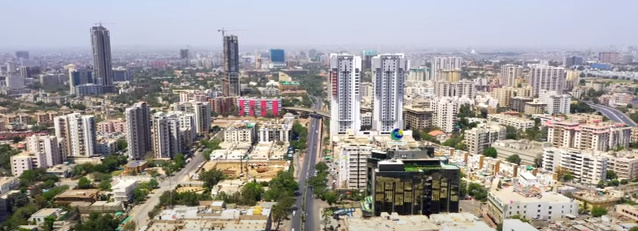
Skyline View of Karachi after Covid-19 Lockdown 
Source: Wikimedia Commons


The Covid-19 pandemic in Pakistan is yet to peak, with over thirteen thousand recorded cases already and no indications that we are flattening the curve yet. Combined with the country’s abysmal health and gender indicators and a fragile healthcare system, this pandemic will exacerbate barriers to sexual and reproductive health and rights (SRHR) for women and girls. This blog discusses emerging areas of concern and points to some opportunities that practitioners and advocates may wish to pay attention to in the months ahead.

Even before the current crisis, access to quality and affordable reproductive healthcare in Pakistan was beyond the reach of many women. Table 1 provides data from the 2018 Pakistan Demographic and Health Survey (PDHS), proof that our key indicators of SRH are far from acceptable.

Only 51 per cent of women had at least four ANC visits for their most recent birth in the five years before the survey, even though WHO recommends a minimum of four. Despite an increase in number of women delivering in health facilities, a significant percentage still have home births in the absence of skilled healthcare providers. The percentage of married women who use contraception is also deplorably low compared to 56 per cent in Bangladesh.

Table 1.
Maternal Mortality Ratioa
276/ 100,000 live births
% of women having at least 4 antenatal visitsb
51.4
% of women who delivered in a health facilityb
66.2
% of currently married women using any contraceptionb
34.2
% of women who experience physical violence by spouseb
23.0
Source: a. PDHS 2006-7, b. PDHS 2017-18

Lockdown measures are likely to worsen these indicators for women and girls. Early reports indicate a sharp rise in domestic violence already.

As the pandemic unfolds in Pakistan, it is burdening an already over-stretched public health system. Our tracking of news and conversations with health-care providers reveal that new urgent areas of concern have emerged even before ICUs have become full of Covid-19 patients. Patients with non-communicable diseases are being denied admission in private hospitals due to a fear of infection.

Doctors and healthcare professionals treating coronavirus patients do not have access to adequate personal protective equipment, and are beaten by police when they protest. Meanwhile, outpatient services were suspended in all major hospitals in Sindh, such as Civil Hospital Karachi, Jinnah Postgraduate Medical Center (JPMC), National Institute of Child Health, as well as Sindh government hospitals and district health facilities from March 18 onwards. After April 2, outpatient services were partially reopened, with JPMC and Civil Hospital reporting a drastic reduction in number of patients.

The impact on the healthcare system is affecting the availability of sexual and reproductive health services. Gynaecologists and obstetricians with private practices in Karachi report that they are following international guidelines on Covid-19 and have limited antenatal appointments and instructed patients to visit only if absolutely necessary. “Pregnant women are very anxious because of this situation as they are unable to have their regular, scheduled appointments. Those with high-risk pregnancies are particularly anxious,” says obstetrician Dr. Sadia Pal. Patients share test results with doctors on WhatsApp, and consultations are carried out on the phone or via Zoom and Skype.

With an increased need for telemedicine, helplines have been set up, such as one by the Pakistan Medical Association for phone consultations. While emergency obstetric services are still operating, many patients may not be able to reach healthcare facilities in time due to closure of public transport. Doctors are also aware of guidelines for pregnant women infected with coronavirus, and Punjab’s health department has exclusively allocated Ganga Ram Hospital in Lahore for the treatment of infected pregnant women.

Pakistan’s National Action Plan for Covid-19 does not include any guidelines for managing SRHR during the pandemic. Sindh’s provincial government, however, has prepared guidelines on managing family planning and reproductive health services. It aims to ensure continued supply of contraceptives and functioning of its Family Welfare Centers (FWCs) situated within health facilities. Those centers located in densely populated areas will provide phone consultations. Contraceptives are to be provided to women in quarantine centers via Special Family Planning Desks.

Those providing services in communities such as Lady Health Workers (LHWs) are to give users with a two-month supply of contraceptives. However, LHWs in Karachi report that they have run out of medical and contraceptive supplies. “The government has promised to provide us with personal protective equipment, but so far we have received nothing. We even have to buy masks and sanitizers ourselves,” reveals a Lady Health Supervisor. The needs of these providers cannot be ignored as women are disproportionately represented in the healthcare workforce, and also have additional burdens of care-giving at home.

Doctors tell us that FWCs in Karachi’s government hospitals are closed due to Sindh’s province-wide lockdown. “Women are leaving hospitals without any post-partum family planning counselling,” says obstetrician Dr. Azra Ahsan. Greenstar, an organization that provides SRH services is also finding it difficult to operate. “Governments are not clear about what constitutes essential versus non-essential services and so clinics are being made to shut down,” reports Sana Durvesh about Greenstar’s family planning clinics.

Pakistan can draw lessons from the 2014-2016 Ebola outbreaks in Liberia, Guinea and Sierra Leone, an indirect impact of which was a significant increase in maternal deaths due to a failure to address SRHR in measures to control the epidemic. Even during the 2015-2016 Zika virus epidemic in Brazil, women had difficulty accessing contraceptives despite the danger it posed to pregnant women. Many advocacy groups and organizations, such as the Center for Reproductive Rights have called on governments to avoid impacts on SRHR during the current crisis. Based on these demands and emerging findings on the impact on SRH services, here are some specific recommendations for Pakistan:
  • Employ women doctors currently out of the work force to provide tele-health services from home, such as the initiative Sehat Kahani, and enable online prescriptions.
  • Provide Personal Protective Equipment to LHWs so they can continue their work within communities
  • Ensure supply, availability and accessibility of essential drugs such as misoprostol through chemists.
  • Ensure affordability by increasing availability of free or low-cost obstetric services and medicines.
  • Ensure availability of contraceptives, including contraceptive injections and long-acting reversible contraceptives.
  • Expand the testing of women in communities for Covid-19.
  • Hire and train women to serve as contact tracers.
  • Expand online counselling services for women seeking medical, psychological and legal support for domestic violence during lockdown and as economic conditions worsen.
  • Remove barriers for domestic violence survivors seeking protection services.
As we grapple with this public health emergency, it is essential that our response is inclusive of the needs of women, girls and marginalized groups and capitalizes on opportunities to remove barriers to quality sexual and reproductive health services.

Tuesday, 31 December 2019

2019 in Review: Our Top 5 Blogs


Word cloud for all our blogs from 2019


In this year-end review, we look back at our top five blog posts which highlight the research Collective has recently been engaged in as well as the evidence-based views of our researchers on important policy issues.

1.      Climate Action in Pakistan: Policies at the Top versus Voices at the Bottom

Perhaps the defining problem of our times, the conversation around climate change and its consequences really came to the fore globally, with teenager Greta Thunberg leading the charge for urgent action. Even though Pakistan is the fifth most vulnerable country to climate change, this conversation has not really caught on in the public sphere.

As one important contribution to this policy issue, Ayesha Mysorewala examines how climate action is understood in Pakistan. Policies tend to be top-down with a weak state-citizen relationship. She argues that for serious climate action this relationship needs to be strengthened.


2.      The Plight of Domestic Workers in Pakistan

The Aurat March in 2019, a protest organized on 8th March 2019 to mark International Women’s Day, was an extremely successful event that was held across multiple cities in Pakistan. Women from across class and ethnic divides came together to demand their rights. While the post-march discussion on social and electronic media highlighted many of the demands made, one issue and segment of women that received scant attention was the right to fair compensation for domestic workers.

Kabeer Dawani looked at legislative gaps for domestic labour and current wage practices to illustrate how there is a long way to go for domestic work, which is one of the most exploitative forms of labour, to be recognized as dignified work.


3.      Women Activists and their Turn to the Courts

In an important milestone for women’s rights, the year 2019 was the first time someone was convicted under the Sindh Domestic Violence Act of 2013 – a full six years after the law was passed! However, this is not the first time the courts have been used to advance women’s rights. In fact, as Ayesha Khan writes, there is a long history in Pakistan of the judiciary being used to make incremental gains for women.

Ayesha powerfully illustrates through multiple cases that women activists, from Asma Jehangir and Hina Jillani to Shahla Zia and Sara Malkani, have used courts strategically to advance human and women’s rights.


4.      BISP, Citizenship and Rights Claims in Pakistan

The Benazir Income Support Programme (BISP) has recently been mired in controversy, after the Government of Pakistan recently removed more than 800,000 beneficiaries from their database. Despite this, BISP remains the the country’s flagship social safety net programme, and has been widely recognized as a successful cash transfer programme.

Rehan Jamil, who is currently doing a doctoral dissertation focused on BISP, provides insights from his field work on how citizens view BISP and the possible impact on the claims they make on the state. His piece highlights how BISP has led to changes in women’s mobility and how they access public spaces. Moreover, Rehan’s work finds no evidence of BISP being used for clientelistic purposes.


5.      Women Leaders in Action: Lady Health Workers’ Protests

The Lady Health Workers (LHW) programme, initiated in 1994, is “one of the largest community health worker programmes in the world.” The aim of the programme was to provide essential primary health services in previously underserved areas, and past evaluations have found the programme successful in improving health indicators.

However, as Komal Qidwai points out, the LHWs have been protesting since 2002 against low and often delayed payments. Within the broader sphere of women’s involvement in contentious politics, Komal’s piece examines the range of tactics used by LHWs to fight for their rights, including sit-ins, hunger strikes, and the use of courts. The essay also shows how engaging in protest action has led to empowerment for many LHWs within their communities.

You can read the full essay here: http://researchcollective.blogspot.com/2019/08/women-leaders-in-action-lady-health.html

Wednesday, 4 December 2019

Where Does the Global Women’s Movement Go Now?


CSO Forum participants display solidarity with protesters in Hong Kong. Photo Credits: Suri Kempe.

The Beijing +25 Asia and Pacific Civil Society Forum held recently in Bangkok brought together over 300 activists representing 250 organizations and networks for a three-day convening. Participants assessed progress since 1995 and crafted a statement of demands to place before the Asia-Pacific Ministerial Conference on the Beijing+25 Review that followed the Forum.

The hashtags #FeministsWantSystemChange and #AngerHopeAction made clear the gathering was a marker of how little had changed on the ground since the ambitious Beijing Platform for Action was agreed at the 4th World Conference for Women in 1995.

Yet, a generation of new activists has come of age since then, with powerful concerns that have pushed the Beijing agenda forward, such as the rights of LGBTQI and disabled persons, and the need to address digital safety. Women around the world are gravely affected by the consequences of climate change, the rise of anti-democratic populism, and a backlash against feminism, which makes 1995 seem more like a peak moment rather than a starting point for the broader transformation anticipated at the time. With spaces for engagement shrinking, inequalities growing, and global regression of hard won sexual and reproductive rights, there is a lot of anger.

In an attempt to identify feminist ways forward, discussions on the first day highlighted that the women’s movement needed to become more inclusive and build deeper grassroots support. Principles of feminist leadership too need to be upheld, such as promoting the practices of reflexivity, care and ethics. It is time for the movement to become re-politicized, strengthen its ties across the older and younger generation, build inter-movement solidarity, and pay greater attention to intersectionality.

The Forum opened on the first day of the #16Days of Activism against Gender-based Violence, marking International Day for the Elimination of Violence against Women (VAW). Three panels were concerned with VAW – including at the workplace and amongst transgender people. UN Special Rapporteur on VAW, Dubravka Å imonovic, spoke eloquently about the struggle to have VAW recognized as a violation of women’s human rights, reminding the audience that at Beijing in 1995 this recognition was just one year old. She said much progress has been made since then in our global understanding of the problem and putting enforcement mechanisms in place. In a tacit acknowledgement of the achievements of #MeToo and the changed conversation around sex, she challenged the international community to make the absence of consent a new global standard for the definition of rape.

Australian panelists from Our Watch presented a detailed programme they have developed for reducing VAW, premised on the argument that gender inequality sets the necessary context for violence against women. Features of this context are: condoning of violence against women, men’s control over decision-making and limits to women’s independence, stereotyped constructions of masculinity and femininity, disrespect towards women and male peer relations that emphasize aggression. So, the actions which would reverse that would involve challenging these norms and values, and strengthening positive relationships within society. They have developed a framework for monitoring and evaluating progress on prevention actions. The Our Watch approach is both ambitious and comprehensive.

Yet activists from the region’s less wealthy countries have to contend with dysfunctional criminal justice and governance mechanisms, and weak data gathering capacities. They commented it would be difficult to apply this approach in their respective countries.

Musawah, a Malaysian based research and advocacy organization working towards equality and justice in the Muslim family, announced a global drive to reform family laws. Inviting people from all religions to join in, they called for transformative action to redraw power relations within the family. They cited a lack of progress since Beijing 1995 in legal reform so critical to improving women’s status in all societies, not only Muslim ones.

Musawah panelists based their arguments on the recent work of feminist scholars Mala Htun, Francesca Jensenius and Jami Nelson-Nunez, who reviewed global datasets and found that family law is the single biggest predictor of women’s economic empowerment, even more so than egalitarian labour laws and parental leave. They discovered discrimination in family laws is significantly associated with female labor force participation, ownership of assets, and ownership of bank accounts.

Musawah panelists argued that family law is uniquely resistant to reform, despite or perhaps because it is so vital to accelerating progress for gender equality. In most countries, family laws are deeply tied to religious and cultural identities, and, in fact, personal status laws are exempt from guarantees of equality and non-discrimination. But, without equality in the family, equality in the public domain is not achievable.

Their own research found that, although all countries claim to use the same sources, where Muslim family law is codified no two countries have done so in the same way. Musawah has identified 12 principal issues of concern. Some address legislative frameworks, such as divorce rights, inheritance, and child custody. Others are procedural, for example, polygamy, VAW within the family, and guardianship of children. The third category addresses practices, for instance, capacity of women to enter into marriage, and child marriage.

All these issues of concern require an examination of existing laws and unpacking how male dominance is built into the frameworks of legal and social practice. Musawah’s approach is premised on the argument that human rights and religion are not incompatible, and a feminist interpretation of religious doctrine – in any scripture  will eventually enable reforms in family law. Many younger feminist delegates from Indonesia, Maldives, Pakistan, India and Malaysia, thought it may be a strategic way to counter the growing global influence of the religious right. However, for the older generation of secular feminists, including myself, a uniform civil code based on a human rights framework may seem more difficult to achieve but ultimately serves women’s interests best.

It is perhaps indicative of the direction in which international feminism has gone since Beijing 1995 that there was little focus at the CSO Forum on the Platform for Action’s commitments to development and peace. Activists regretted that with the advent of first the Millenium Development Goals and then the Sustainable Development Goals (SDGs), the international community considers it adequate to subsume the feminist agenda within SDG Goal 5, replacing a critique of patriarchy with a discourse of empowerment instead. In their joint statement, they urged governments represented at the Ministerial Conference to: ensure the primacy of human rights in economic, trade, and legal frameworks; invest in social protection and health care for all; examine the implications of the digital economy for women; and strengthen national frameworks on gender and disability inclusion.

The Declaration of the Ministerial Conference acknowledged activists’ concerns without explicitly framing their statement in human rights language. Instead, the ministers recognized women’s economic contribution and called for measures to include them in the benefits of development and protect them more effectively from poverty and inequality. Avoiding the language of rights, patriarchy and feminism altogether, they “committed to work together with key stakeholders to transform negative gender norms, discriminatory social attitudes and to eliminate structurally unequal power relations that persist between women and men.” The Declaration will be heard as part of the global review of Beijing at the Commission on the Status of Women in New York next March. Surely many attending will have heard these words somewhere before, maybe in Beijing.