Pages

Showing posts with label violence against women. Show all posts

Wednesday, 29 April 2020

Covid-19 Impact on Sexual and Reproductive Health in Pakistan

By: Komal Qidwai 

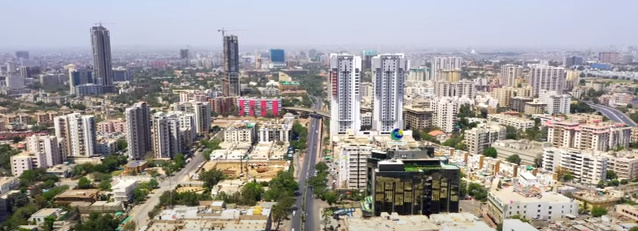
Skyline View of Karachi after Covid-19 Lockdown 
Source: Wikimedia Commons


The Covid-19 pandemic in Pakistan is yet to peak, with over thirteen thousand recorded cases already and no indications that we are flattening the curve yet. Combined with the country’s abysmal health and gender indicators and a fragile healthcare system, this pandemic will exacerbate barriers to sexual and reproductive health and rights (SRHR) for women and girls. This blog discusses emerging areas of concern and points to some opportunities that practitioners and advocates may wish to pay attention to in the months ahead.

Even before the current crisis, access to quality and affordable reproductive healthcare in Pakistan was beyond the reach of many women. Table 1 provides data from the 2018 Pakistan Demographic and Health Survey (PDHS), proof that our key indicators of SRH are far from acceptable.

Only 51 per cent of women had at least four ANC visits for their most recent birth in the five years before the survey, even though WHO recommends a minimum of four. Despite an increase in number of women delivering in health facilities, a significant percentage still have home births in the absence of skilled healthcare providers. The percentage of married women who use contraception is also deplorably low compared to 56 per cent in Bangladesh.

Table 1.
Maternal Mortality Ratioa
276/ 100,000 live births
% of women having at least 4 antenatal visitsb
51.4
% of women who delivered in a health facilityb
66.2
% of currently married women using any contraceptionb
34.2
% of women who experience physical violence by spouseb
23.0
Source: a. PDHS 2006-7, b. PDHS 2017-18

Lockdown measures are likely to worsen these indicators for women and girls. Early reports indicate a sharp rise in domestic violence already.

As the pandemic unfolds in Pakistan, it is burdening an already over-stretched public health system. Our tracking of news and conversations with health-care providers reveal that new urgent areas of concern have emerged even before ICUs have become full of Covid-19 patients. Patients with non-communicable diseases are being denied admission in private hospitals due to a fear of infection.

Doctors and healthcare professionals treating coronavirus patients do not have access to adequate personal protective equipment, and are beaten by police when they protest. Meanwhile, outpatient services were suspended in all major hospitals in Sindh, such as Civil Hospital Karachi, Jinnah Postgraduate Medical Center (JPMC), National Institute of Child Health, as well as Sindh government hospitals and district health facilities from March 18 onwards. After April 2, outpatient services were partially reopened, with JPMC and Civil Hospital reporting a drastic reduction in number of patients.

The impact on the healthcare system is affecting the availability of sexual and reproductive health services. Gynaecologists and obstetricians with private practices in Karachi report that they are following international guidelines on Covid-19 and have limited antenatal appointments and instructed patients to visit only if absolutely necessary. “Pregnant women are very anxious because of this situation as they are unable to have their regular, scheduled appointments. Those with high-risk pregnancies are particularly anxious,” says obstetrician Dr. Sadia Pal. Patients share test results with doctors on WhatsApp, and consultations are carried out on the phone or via Zoom and Skype.

With an increased need for telemedicine, helplines have been set up, such as one by the Pakistan Medical Association for phone consultations. While emergency obstetric services are still operating, many patients may not be able to reach healthcare facilities in time due to closure of public transport. Doctors are also aware of guidelines for pregnant women infected with coronavirus, and Punjab’s health department has exclusively allocated Ganga Ram Hospital in Lahore for the treatment of infected pregnant women.

Pakistan’s National Action Plan for Covid-19 does not include any guidelines for managing SRHR during the pandemic. Sindh’s provincial government, however, has prepared guidelines on managing family planning and reproductive health services. It aims to ensure continued supply of contraceptives and functioning of its Family Welfare Centers (FWCs) situated within health facilities. Those centers located in densely populated areas will provide phone consultations. Contraceptives are to be provided to women in quarantine centers via Special Family Planning Desks.

Those providing services in communities such as Lady Health Workers (LHWs) are to give users with a two-month supply of contraceptives. However, LHWs in Karachi report that they have run out of medical and contraceptive supplies. “The government has promised to provide us with personal protective equipment, but so far we have received nothing. We even have to buy masks and sanitizers ourselves,” reveals a Lady Health Supervisor. The needs of these providers cannot be ignored as women are disproportionately represented in the healthcare workforce, and also have additional burdens of care-giving at home.

Doctors tell us that FWCs in Karachi’s government hospitals are closed due to Sindh’s province-wide lockdown. “Women are leaving hospitals without any post-partum family planning counselling,” says obstetrician Dr. Azra Ahsan. Greenstar, an organization that provides SRH services is also finding it difficult to operate. “Governments are not clear about what constitutes essential versus non-essential services and so clinics are being made to shut down,” reports Sana Durvesh about Greenstar’s family planning clinics.

Pakistan can draw lessons from the 2014-2016 Ebola outbreaks in Liberia, Guinea and Sierra Leone, an indirect impact of which was a significant increase in maternal deaths due to a failure to address SRHR in measures to control the epidemic. Even during the 2015-2016 Zika virus epidemic in Brazil, women had difficulty accessing contraceptives despite the danger it posed to pregnant women. Many advocacy groups and organizations, such as the Center for Reproductive Rights have called on governments to avoid impacts on SRHR during the current crisis. Based on these demands and emerging findings on the impact on SRH services, here are some specific recommendations for Pakistan:
  • Employ women doctors currently out of the work force to provide tele-health services from home, such as the initiative Sehat Kahani, and enable online prescriptions.
  • Provide Personal Protective Equipment to LHWs so they can continue their work within communities
  • Ensure supply, availability and accessibility of essential drugs such as misoprostol through chemists.
  • Ensure affordability by increasing availability of free or low-cost obstetric services and medicines.
  • Ensure availability of contraceptives, including contraceptive injections and long-acting reversible contraceptives.
  • Expand the testing of women in communities for Covid-19.
  • Hire and train women to serve as contact tracers.
  • Expand online counselling services for women seeking medical, psychological and legal support for domestic violence during lockdown and as economic conditions worsen.
  • Remove barriers for domestic violence survivors seeking protection services.
As we grapple with this public health emergency, it is essential that our response is inclusive of the needs of women, girls and marginalized groups and capitalizes on opportunities to remove barriers to quality sexual and reproductive health services.

Thursday, 27 December 2018

Deconstruction of #MeToo and the new-age feminist movement

By Sana Naqvi

Hashtag #MeToo
Source: Wikimedia Commons


The feminist movement has been an intrinsic part of progress in Pakistan’s narrative and has evolved over the years. The movement today has more tools at its disposal than the street-based activism of the previous generation of feminists; new platforms have emerged and transformed the way protest and dialogue on gender issues can take place. The #MeToo movement uses social media to amplify women’s voice by carving a space for them to share harrowing encounters of being sexually assaulted or incidents of other forms of sexual harassment. One of the criticisms leveled against the movement is that due process is not followed and has resulted in creating binaries between social media and legal recourse. It is important to look at both separately, but also together, and try to come up with a nuanced way forward.

Social media has transformed the activism landscape globally and has allowed women to speak about their injustices, reach out to others who might feel as immobile, and provide an avenue that has for the most part not been available to many. Facilitating women to find solace in comfortable spaces is perhaps social media’s greatest achievement.

Misunderstanding about the #MeToo movement has led to it being criticized as a ‘witch hunt’, leading to reservations against it. The movement is about a certain kind of accountability, which requires men to take responsibility for their actions and exercise caution about improper conduct. With women no longer remaining silent about their experiences, they are trying to transform the discourse by changing the norms around how men treat women and normalizing conversation on sexual harassment, which is scarce, if at all.

In situations where harassment is involved, it is difficult to conceptualize what ‘justice’ would look like, as a result it becomes increasingly complicated to have a universal set of rules. Critics are wary of using social media, and propagate the use of legal recourse. In a country like Pakistan, where legal systems have failed women multiple times, is this the best course of action?

The Protection against Harassment of Women at the Workplace Act, passed in 2010 requires each organization to have an inquiry committee set up to listen to complaints that employees might have, setting out ‘major’ and ‘minor’ penalties. Complaints can also be reported to the federal or provincial ombudsman specially appointed to handle harassment cases. To complicate this relatively well-drafted law which includes an all-encompassing definition of what harassment is, the Sindh ombudsmen is a male; however, few women would be comfortable speaking to a man about their experience. Balochistan and Khyber Pakhtunkhwa do not even have ombudsmen, so who do women reach out to when the legislative mechanism (the ombudsman) is absent? In this context if women resort to social media, is it still fair to demonize them for it?

In our work in the Action for Empowerment and Accountability Programme, we have studied politics as an arena in which there is widespread harassment. Legislators have their personal character and physical safety vulnerable to attack; female politicians are frequently verbally harassed during rallies, in talk shows and even on the floor of the parliament, which is routinely covered by national media. Examples include Shireen Mazari being called a tractor trolley, Amir Liaqat’s inappropriate comments about Sherry Rehman and a religious cleric assassinating Punjab Minister for Social Welfare Zille Huma in 2007 for not wearing ‘Muslim clothing’. The National Assembly still has no committee specifically for parliamentarians to hear complaints of harassment. As incidents have become public, some women politicians with voice and agency occasionally take issue and raise objections on the floor of the house.

Strong action across the board is required to make the political arena safe for all women because when we achieve this, women in important positions will be able to ensure that protective laws against women are tabled, passed and implemented. Our research has shown that protection for women politicians is largely missing, and this issue is not class specific nor is it party specific - it’s gender-specific.

Women who speak up are labelled as doing it for attention, fame, vengeance and money, but the movement’s real aim is to create support systems for victims and also help move forward from the trauma. One way to achieve this is the concept of ‘restorative justice’ which ‘emphasizes accountability and making amends, seeks to avoid sentencing, instead focusing on bringing victims and offenders together to understand the magnitude of the harm done, the ways in which healing can be achieved’. Constructive paths like this can only be achieved when there is open discussion about how to deal with harassment; dialogue not punishment can help curtail future behaviors.

The #MeToo movement raises important questions, a pertinent one being why frameworks to deal with sexual harassment are so weak. Even though we have a sexual harassment law passed almost a decade ago, it has taken the #MeToo movement in 2018 to push for more widespread sexual harassment committees at workplaces and a review of the Ombudsmen’s effectiveness. It is important for those who are skeptical of the #MeToo movement to recognize that it has alerted the public of the lack of implementation of the existing laws, forcing women to take to social media. This movement is crucial to give agency to women, and the way forward is if legal recourse and social media stop being seen as antithetical to one another.

Monday, 17 July 2017

Pakistan’s jirgas: buying peace at the expense of women’s rights?

by Ayesha Khan

A jirga in Afghanistan. Such systems are a commonplace dispute resolution mechanism in Pakistan as well.
Photo credit: Wikimedia Commons

It has taken nine military operations since 2002 to clear Pakistan’s frontier and tribal areas from Taliban, and millions of people have been displaced from their homes, some more than once. Pakistanis have paid a high price for allowing religious extremism to grow on their soil. Between 2003-17 over 21,000 civilians, and even more militants, have been killed.

Thursday, 29 January 2015

DNA and the Pursuit of Justice

by Ayesha Khan

The press recently reported that the Senate Standing Committee on Law and Justice has approved amendments in the country’s anti-rape laws. If they are passed, DNA profiling will be admitted as crucial evidence during investigation into rape cases. Also it was proposed that medical examination in cases of rape take place only in government-run hospitals and character assassination of victims during the trial be barred.