Pages

Showing posts with label human rights. Show all posts

Wednesday, 29 April 2020

Covid-19 Impact on Sexual and Reproductive Health in Pakistan

By: Komal Qidwai 

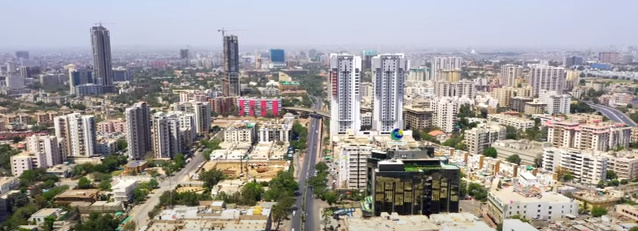
Skyline View of Karachi after Covid-19 Lockdown 
Source: Wikimedia Commons


The Covid-19 pandemic in Pakistan is yet to peak, with over thirteen thousand recorded cases already and no indications that we are flattening the curve yet. Combined with the country’s abysmal health and gender indicators and a fragile healthcare system, this pandemic will exacerbate barriers to sexual and reproductive health and rights (SRHR) for women and girls. This blog discusses emerging areas of concern and points to some opportunities that practitioners and advocates may wish to pay attention to in the months ahead.

Even before the current crisis, access to quality and affordable reproductive healthcare in Pakistan was beyond the reach of many women. Table 1 provides data from the 2018 Pakistan Demographic and Health Survey (PDHS), proof that our key indicators of SRH are far from acceptable.

Only 51 per cent of women had at least four ANC visits for their most recent birth in the five years before the survey, even though WHO recommends a minimum of four. Despite an increase in number of women delivering in health facilities, a significant percentage still have home births in the absence of skilled healthcare providers. The percentage of married women who use contraception is also deplorably low compared to 56 per cent in Bangladesh.

Table 1.
Maternal Mortality Ratioa
276/ 100,000 live births
% of women having at least 4 antenatal visitsb
51.4
% of women who delivered in a health facilityb
66.2
% of currently married women using any contraceptionb
34.2
% of women who experience physical violence by spouseb
23.0
Source: a. PDHS 2006-7, b. PDHS 2017-18

Lockdown measures are likely to worsen these indicators for women and girls. Early reports indicate a sharp rise in domestic violence already.

As the pandemic unfolds in Pakistan, it is burdening an already over-stretched public health system. Our tracking of news and conversations with health-care providers reveal that new urgent areas of concern have emerged even before ICUs have become full of Covid-19 patients. Patients with non-communicable diseases are being denied admission in private hospitals due to a fear of infection.

Doctors and healthcare professionals treating coronavirus patients do not have access to adequate personal protective equipment, and are beaten by police when they protest. Meanwhile, outpatient services were suspended in all major hospitals in Sindh, such as Civil Hospital Karachi, Jinnah Postgraduate Medical Center (JPMC), National Institute of Child Health, as well as Sindh government hospitals and district health facilities from March 18 onwards. After April 2, outpatient services were partially reopened, with JPMC and Civil Hospital reporting a drastic reduction in number of patients.

The impact on the healthcare system is affecting the availability of sexual and reproductive health services. Gynaecologists and obstetricians with private practices in Karachi report that they are following international guidelines on Covid-19 and have limited antenatal appointments and instructed patients to visit only if absolutely necessary. “Pregnant women are very anxious because of this situation as they are unable to have their regular, scheduled appointments. Those with high-risk pregnancies are particularly anxious,” says obstetrician Dr. Sadia Pal. Patients share test results with doctors on WhatsApp, and consultations are carried out on the phone or via Zoom and Skype.

With an increased need for telemedicine, helplines have been set up, such as one by the Pakistan Medical Association for phone consultations. While emergency obstetric services are still operating, many patients may not be able to reach healthcare facilities in time due to closure of public transport. Doctors are also aware of guidelines for pregnant women infected with coronavirus, and Punjab’s health department has exclusively allocated Ganga Ram Hospital in Lahore for the treatment of infected pregnant women.

Pakistan’s National Action Plan for Covid-19 does not include any guidelines for managing SRHR during the pandemic. Sindh’s provincial government, however, has prepared guidelines on managing family planning and reproductive health services. It aims to ensure continued supply of contraceptives and functioning of its Family Welfare Centers (FWCs) situated within health facilities. Those centers located in densely populated areas will provide phone consultations. Contraceptives are to be provided to women in quarantine centers via Special Family Planning Desks.

Those providing services in communities such as Lady Health Workers (LHWs) are to give users with a two-month supply of contraceptives. However, LHWs in Karachi report that they have run out of medical and contraceptive supplies. “The government has promised to provide us with personal protective equipment, but so far we have received nothing. We even have to buy masks and sanitizers ourselves,” reveals a Lady Health Supervisor. The needs of these providers cannot be ignored as women are disproportionately represented in the healthcare workforce, and also have additional burdens of care-giving at home.

Doctors tell us that FWCs in Karachi’s government hospitals are closed due to Sindh’s province-wide lockdown. “Women are leaving hospitals without any post-partum family planning counselling,” says obstetrician Dr. Azra Ahsan. Greenstar, an organization that provides SRH services is also finding it difficult to operate. “Governments are not clear about what constitutes essential versus non-essential services and so clinics are being made to shut down,” reports Sana Durvesh about Greenstar’s family planning clinics.

Pakistan can draw lessons from the 2014-2016 Ebola outbreaks in Liberia, Guinea and Sierra Leone, an indirect impact of which was a significant increase in maternal deaths due to a failure to address SRHR in measures to control the epidemic. Even during the 2015-2016 Zika virus epidemic in Brazil, women had difficulty accessing contraceptives despite the danger it posed to pregnant women. Many advocacy groups and organizations, such as the Center for Reproductive Rights have called on governments to avoid impacts on SRHR during the current crisis. Based on these demands and emerging findings on the impact on SRH services, here are some specific recommendations for Pakistan:
  • Employ women doctors currently out of the work force to provide tele-health services from home, such as the initiative Sehat Kahani, and enable online prescriptions.
  • Provide Personal Protective Equipment to LHWs so they can continue their work within communities
  • Ensure supply, availability and accessibility of essential drugs such as misoprostol through chemists.
  • Ensure affordability by increasing availability of free or low-cost obstetric services and medicines.
  • Ensure availability of contraceptives, including contraceptive injections and long-acting reversible contraceptives.
  • Expand the testing of women in communities for Covid-19.
  • Hire and train women to serve as contact tracers.
  • Expand online counselling services for women seeking medical, psychological and legal support for domestic violence during lockdown and as economic conditions worsen.
  • Remove barriers for domestic violence survivors seeking protection services.
As we grapple with this public health emergency, it is essential that our response is inclusive of the needs of women, girls and marginalized groups and capitalizes on opportunities to remove barriers to quality sexual and reproductive health services.

Wednesday, 4 December 2019

Where Does the Global Women’s Movement Go Now?


CSO Forum participants display solidarity with protesters in Hong Kong. Photo Credits: Suri Kempe.

The Beijing +25 Asia and Pacific Civil Society Forum held recently in Bangkok brought together over 300 activists representing 250 organizations and networks for a three-day convening. Participants assessed progress since 1995 and crafted a statement of demands to place before the Asia-Pacific Ministerial Conference on the Beijing+25 Review that followed the Forum.

The hashtags #FeministsWantSystemChange and #AngerHopeAction made clear the gathering was a marker of how little had changed on the ground since the ambitious Beijing Platform for Action was agreed at the 4th World Conference for Women in 1995.

Yet, a generation of new activists has come of age since then, with powerful concerns that have pushed the Beijing agenda forward, such as the rights of LGBTQI and disabled persons, and the need to address digital safety. Women around the world are gravely affected by the consequences of climate change, the rise of anti-democratic populism, and a backlash against feminism, which makes 1995 seem more like a peak moment rather than a starting point for the broader transformation anticipated at the time. With spaces for engagement shrinking, inequalities growing, and global regression of hard won sexual and reproductive rights, there is a lot of anger.

In an attempt to identify feminist ways forward, discussions on the first day highlighted that the women’s movement needed to become more inclusive and build deeper grassroots support. Principles of feminist leadership too need to be upheld, such as promoting the practices of reflexivity, care and ethics. It is time for the movement to become re-politicized, strengthen its ties across the older and younger generation, build inter-movement solidarity, and pay greater attention to intersectionality.

The Forum opened on the first day of the #16Days of Activism against Gender-based Violence, marking International Day for the Elimination of Violence against Women (VAW). Three panels were concerned with VAW – including at the workplace and amongst transgender people. UN Special Rapporteur on VAW, Dubravka Å imonovic, spoke eloquently about the struggle to have VAW recognized as a violation of women’s human rights, reminding the audience that at Beijing in 1995 this recognition was just one year old. She said much progress has been made since then in our global understanding of the problem and putting enforcement mechanisms in place. In a tacit acknowledgement of the achievements of #MeToo and the changed conversation around sex, she challenged the international community to make the absence of consent a new global standard for the definition of rape.

Australian panelists from Our Watch presented a detailed programme they have developed for reducing VAW, premised on the argument that gender inequality sets the necessary context for violence against women. Features of this context are: condoning of violence against women, men’s control over decision-making and limits to women’s independence, stereotyped constructions of masculinity and femininity, disrespect towards women and male peer relations that emphasize aggression. So, the actions which would reverse that would involve challenging these norms and values, and strengthening positive relationships within society. They have developed a framework for monitoring and evaluating progress on prevention actions. The Our Watch approach is both ambitious and comprehensive.

Yet activists from the region’s less wealthy countries have to contend with dysfunctional criminal justice and governance mechanisms, and weak data gathering capacities. They commented it would be difficult to apply this approach in their respective countries.

Musawah, a Malaysian based research and advocacy organization working towards equality and justice in the Muslim family, announced a global drive to reform family laws. Inviting people from all religions to join in, they called for transformative action to redraw power relations within the family. They cited a lack of progress since Beijing 1995 in legal reform so critical to improving women’s status in all societies, not only Muslim ones.

Musawah panelists based their arguments on the recent work of feminist scholars Mala Htun, Francesca Jensenius and Jami Nelson-Nunez, who reviewed global datasets and found that family law is the single biggest predictor of women’s economic empowerment, even more so than egalitarian labour laws and parental leave. They discovered discrimination in family laws is significantly associated with female labor force participation, ownership of assets, and ownership of bank accounts.

Musawah panelists argued that family law is uniquely resistant to reform, despite or perhaps because it is so vital to accelerating progress for gender equality. In most countries, family laws are deeply tied to religious and cultural identities, and, in fact, personal status laws are exempt from guarantees of equality and non-discrimination. But, without equality in the family, equality in the public domain is not achievable.

Their own research found that, although all countries claim to use the same sources, where Muslim family law is codified no two countries have done so in the same way. Musawah has identified 12 principal issues of concern. Some address legislative frameworks, such as divorce rights, inheritance, and child custody. Others are procedural, for example, polygamy, VAW within the family, and guardianship of children. The third category addresses practices, for instance, capacity of women to enter into marriage, and child marriage.

All these issues of concern require an examination of existing laws and unpacking how male dominance is built into the frameworks of legal and social practice. Musawah’s approach is premised on the argument that human rights and religion are not incompatible, and a feminist interpretation of religious doctrine – in any scripture – will eventually enable reforms in family law. Many younger feminist delegates from Indonesia, Maldives, Pakistan, India and Malaysia, thought it may be a strategic way to counter the growing global influence of the religious right. However, for the older generation of secular feminists, including myself, a uniform civil code based on a human rights framework may seem more difficult to achieve but ultimately serves women’s interests best.

It is perhaps indicative of the direction in which international feminism has gone since Beijing 1995 that there was little focus at the CSO Forum on the Platform for Action’s commitments to development and peace. Activists regretted that with the advent of first the Millenium Development Goals and then the Sustainable Development Goals (SDGs), the international community considers it adequate to subsume the feminist agenda within SDG Goal 5, replacing a critique of patriarchy with a discourse of empowerment instead. In their joint statement, they urged governments represented at the Ministerial Conference to: ensure the primacy of human rights in economic, trade, and legal frameworks; invest in social protection and health care for all; examine the implications of the digital economy for women; and strengthen national frameworks on gender and disability inclusion.

The Declaration of the Ministerial Conference acknowledged activists’ concerns without explicitly framing their statement in human rights language. Instead, the ministers recognized women’s economic contribution and called for measures to include them in the benefits of development and protect them more effectively from poverty and inequality. Avoiding the language of rights, patriarchy and feminism altogether, they “committed to work together with key stakeholders to transform negative gender norms, discriminatory social attitudes and to eliminate structurally unequal power relations that persist between women and men.” The Declaration will be heard as part of the global review of Beijing at the Commission on the Status of Women in New York next March. Surely many attending will have heard these words somewhere before, maybe in Beijing. 

Friday, 31 May 2019

The language of disability

By Ayesha Mysorewala and Saba Aslam


Source: Pakistan Population Census report (1998). Pakistan Bureau of Statistics


Globally, the dialogue on disability has made a lot of progress. The 2006 UN Convention on the Rights of Persons with Disabilities (UN CRPD) marked an important shift in the discourse on disability by moving away from taking a medical approach towards a social model of disability. The social model suggests that “the barriers individuals face are not a result of their impairments (that the problem is not the individual), but that the barriers are created by society, attitudes and the physical environment”.[1] If a person with a disability (PWD) is able to exercise rights through for example, inclusive education, accessible transport, and has equal opportunities to work at public or private institutions, this may imply a social model of disability or a rights-based approach.

We argue that language used for disabilities has a key role in shaping barriers and access to an inclusive society.

A recent report by the British Council that focused on mainstreaming young Pakistanis with disabilities finds that persons with disabilities (PWDs) are often overlooked in discussions about Pakistan’s future. This is despite the fact that Pakistan has ratified the UN CRPD in 2011.

One manifestation of our collective lack of focus on disabilities is a lack of vocabulary and understanding for disability in local languages, including Urdu.

While conducting qualitative fieldwork for an ongoing project “Mainstreaming Inclusive Resilience in South Asia”, we were investigating the experiences of vulnerable groups, including PWDs, in natural disasters in Sindh. We found that there are varying understandings in communities regarding who counts as disabled. In surveys, this makes it very difficult to effectively identify PWDs.

Our team tried to establish a common vocabulary to discuss how communities understand disabilities. The Urdu word mazoor was an obvious choice (which has also been used in the Urdu questionnaire of the previous census). In qualitative interviews, however, this induced an image of a person who has physical impairments. Probing into specific types of disabilities led us to find that many categories such as hearing and/or speech impairments are not perceived as disabilities unless they prevent a person from engaging in productive work.

The problem of researching intellectual disabilities is even more complex. Communities themselves offered terms to us during the qualitative interviews. Disempowering words such as charyo and pagal were mentioned by a number of respondents to identify and describe extreme forms of intellectual disabilities, which to some extent indicates a culture of stigma and pity. In Sindhi speaking areas, we settled on using the word Jaddo (impairments) to enquire about disabilities. This created room to discuss more subtle intellectual disabilities such as slow learning in schools. It was clear, however, that people did not identify the latter as disabilities or mazoori. This led us to conclude that disability is constructed in a social context.

There is the additional complexity of variations in meaning attached to local terms in different contexts. Many of the local terms (including the ones mentioned above) are deeply rooted in the specific historical context of different communities, which warrants an entirely separate blog. The implication, however, is a need to exercise nuance in the meanings we attach to the terms that are used.

The lack of local metaphor to describe the concept of disabilities have implications for research and policy. The most significant one is the underreporting of PWDs.

The Pakistan Demographic and Health Survey (PDHS) 2017-18 follows an International Classification of Functioning, Disability, and Health that covers six core domains – seeing, hearing, communication, cognition, walking and self-care and disaggregates impairments, which is useful as respondents are asked about their level of difficulty in each of the domains. However, the 1998 census[2] reports mental disabilities in two categories: insanity and mental retardation[3] which may reinforce stigma, and make it less likely for respondents to report disability.

Undercounting in turn reflects a weak emphasis on needs of disability in policy and its implementation. Most legislative changes that have occurred are subject to the 1981 Disabled Persons Employment and Rehabilitation Ordinance, which deals mostly with setting quotas for PWDs in jobs. Post-devolution amendments to the Ordinance, however, focus on creating accessible infrastructure, providing special identity cards and expanding cash assistance to PWDs. Even though there are few laws that address broader issues of social exclusion at the national level.[4], we find that Sindh Empowerment of Persons with Disabilities Act 2018 and Balochistan Persons with Disabilities Act 2017 follow a social model of disability. The Sindh 2018 Disability Act is particularly exceptional as it stresses on inclusion of PWDs in all institutions. It is not clear however, the extent to which these legislations are implemented.

There are no comprehensive records of PWDs at local administrative levels such as districts and Union Councils. There is also a lack of sensitization around disability amongst local government officials and the district and Union Council levels. In our discussions with communities, we found that this leads to great deal of exclusion of PWDs and their needs in evacuation and relief measures, and adds greater burdens on already distressed households in disaster-prone areas. It also leads to inappropriately designed interventions by organizations funded by donors who pressurize an emphasis on disability without it being internalized by those implementing the programmes.

There is a need to foster open debate on disability and establish a more contextualized understanding and empowering language for various kinds of disabilities at all levels. Comprehensive legislation in all provinces (and its tracking) would be an excellent step. However, there is still a long way to go in moving from a culture of neglect and stigma around disability to one that focuses on empowerment and rights. Perhaps the first step can be thinking about how we talk about PWDs in our everyday conversations.


[1] The Economist Intelligence Unit. (2014). Moving from the Margins: Mainstreaming Persons with Disabilities in Pakistan.

[2] Full reports on disability from 2017 census are not yet publicly available

[3] The Mental Health Ordinance of 2001 provides a relatively comprehensive set definitions of intellectual impairments. Gilani et al (2015) argue that this law outdated archaic and imprecise terms such as lunatic, insane and asylum

[4] Special Citizens Act (2008), for example, states that PWDs shall be provided access at all public places such as reserved seats in public places and in transport

Monday, 15 August 2016

Coercion inside the home

by Haris Gazdar and Ayesha Khan

Domestic workers in the 14th century
Photo credit: Wikipedia commons

Bonded labour constitutes one of the gravest violations of individual human rights. It is perceived — both at the popular level, as well as among legislators and the judiciary — as akin to slavery. Yet, bonded labour often comes disguised in a web of legitimate ‘voluntary’ economic transactions mediated through social control. Haris Gazdar and Ayesha Khan explored bonded labour in domestic work and begging in a chapter in the book ‘Bonded Labour in Pakistan’. The book is edited by Ayaz Qureshi and Ali Khan and published by the Oxford University Press. An excerpt of the chapter was recently featured in Dawn’s Books and Authors. An even shorter version with a focus on rural domestic work is reproduced here.

Monday, 15 June 2015

The Government’s Obligation to Uphold the Right to Maternal Health

by Sara Malkani

Photo credit: Patient with nurse at Koohi Goth Women's Hospital/ Dr. Sarwan

WHO estimates the rate of maternal mortality in Pakistan at 170 per 100,000 lives births. In developed countries the figure is around 11 per 100,000.

The high rates of maternal mortality and morbidity in Pakistan are not simply a reflection of inadequate resources or poverty, or lack of priorities on the part of the government. They also constitute violations of the fundamental right to health guaranteed under the Constitution of Pakistan. The right to health does not mean that everyone has a right to be healthy. Nor does it mean that the state is responsible for every death or injury. Instead, the right to health means that governments must generate conditions in which everyone can be as healthy as possible.[1]