 |
| Modern, packaged milk still struggles to compete with the traditional alternative of loose, raw milk. Photo credit: Fawad A. Najam, Flickr.com |

Showing posts with label LANSA. Show all posts
Showing posts with label LANSA. Show all posts
Monday, 9 April 2018
The Dairy Reform That Wasn’t
By Rashid Mehmood and Natasha Ansari
There is a public debate about the quality and safety of milk sold to consumers. Most recently the Supreme Court took regulatory action with respect to some brands of packaged milk and also issued notices to companies regarding clearer labeling of whiteners as not being milk. Public attention on the dairy sector is welcome, but as government and courts gear up for action, it is important to understand the roots of current regulatory lapses, and to set out a broader agenda of reform that goes beyond consumer protection.

Wednesday, 15 March 2017
What women do
by Haris Gazdar
We use the word ‘right’ a lot, but it is a haloed and distant term. In many languages it invokes truth – an aura of goodness and an assuring feeling of timelessness. A nation has the right to self-determination, an individual has the right to her or his conscience, and a child has the right to education. A nation can be hundreds or thousands of years old, and might have always had the right to self-determination, but it can practice self-determination once it is recognised by other nations. Ask any Palestinian. The individual’s right to conscience might have existed since before the day Socrates drank poisoned hemlock, but it can be practised when other individuals and the legal and political systems recognise that a person cannot be punished for their beliefs alone. The child always had the right to be educated but will actually be schooled when the community recognises this right and provides the necessary resources. Recognition, therefore, is the more accessible fellow-traveller of right. It is not only the way in which rights are realised, but is also a step towards making rights enforceable.
 |
| Women and girls cut grass for fodder in Mirpurkhas Photo credit: Collective team |
We use the word ‘right’ a lot, but it is a haloed and distant term. In many languages it invokes truth – an aura of goodness and an assuring feeling of timelessness. A nation has the right to self-determination, an individual has the right to her or his conscience, and a child has the right to education. A nation can be hundreds or thousands of years old, and might have always had the right to self-determination, but it can practice self-determination once it is recognised by other nations. Ask any Palestinian. The individual’s right to conscience might have existed since before the day Socrates drank poisoned hemlock, but it can be practised when other individuals and the legal and political systems recognise that a person cannot be punished for their beliefs alone. The child always had the right to be educated but will actually be schooled when the community recognises this right and provides the necessary resources. Recognition, therefore, is the more accessible fellow-traveller of right. It is not only the way in which rights are realised, but is also a step towards making rights enforceable.
Wednesday, 1 February 2017
The hurdle of hesitance
by Azmat Budhani
 |
| People's fear of health related interventions is not new. Spoof by British satirist James Gillroy depicting people's fear of small pox vaccines, 1802 Photo credit: Wikimedia Commons |
As a researcher, I have often dealt with non-responses or respondent hesitancy in fieldwork. Earlier, I used to think that this hesitancy can only be minimized by building personal rapport through multiple visits. Over the years though, I have come to appreciate the role survey design plays in participant engagement. Our LANSA study, for example, seeks to investigate the impacts of women’s agricultural work on their own and their children’s nutrition levels. For this survey, we took the mother of an infant as the key respondent. Placing her instead of the head of household (who in most cases are male breadwinners for the family) on the top of the household roster had important implications for our fieldwork, as discussed in an earlier blog. Despite the process of anthropometric measurement being fairly clinical, or even intrusive, we found a majority of mothers eager to cooperate. They were keen to provide any information that could potentially benefit the health and future well-being of their children. Women tried to navigate constraints put by male community leaders and heads of households. One mother, for example said, ‘’My husband works in the Pakistan Army. He does not like NGOs. However, I am willing to participate.”
Friday, 6 January 2017
Understanding agri-food value chains for nutrition
by Nigel Poole, Haris Gazdar and Mar Maestre
Undernutrition is a central and persistent challenge for global development, above all in South Asia. Mobilising agri-food businesses to support efforts to reduce undernutrition is challenging. The LANSA (Leveraging Agriculture for Nutrition in South Asia) team has been researching for the past two years how the markets for food can be improved so that substantive and sustained consumption of nutrient-dense foods by the poor in households that are post-farm-gate is achieved. Here, nutrient rich foods are those that, if consumed in adequate quantities (WASH and health conditions not considered) are likely to improve the nutritional status of individuals who are undernourished in terms of micronutrients. We understand agri-food value chains as the initiatives, either donor, government or business driven that we will be analysing.
 |
| Photo credit: Flickr/ADB |
Undernutrition is a central and persistent challenge for global development, above all in South Asia. Mobilising agri-food businesses to support efforts to reduce undernutrition is challenging. The LANSA (Leveraging Agriculture for Nutrition in South Asia) team has been researching for the past two years how the markets for food can be improved so that substantive and sustained consumption of nutrient-dense foods by the poor in households that are post-farm-gate is achieved. Here, nutrient rich foods are those that, if consumed in adequate quantities (WASH and health conditions not considered) are likely to improve the nutritional status of individuals who are undernourished in terms of micronutrients. We understand agri-food value chains as the initiatives, either donor, government or business driven that we will be analysing.
Tuesday, 8 November 2016
Do we give back?
by Amna Akhtar
 |
| What can we give back? Respondents at the field site in Dadu Photo credit: Collective team |
‘Tell me what’s wrong with my baby. There are no health services in these areas. Help us.’ Conversations and pleas such as these are not uncommon for researchers to hear. Every time we step into the field in rural, low income areas of the country, we are met with countless appeals from our respondents to do something. To act. To intervene. But as researchers, that is the one thing we are trained not to do. As observers of an issue or community our task is to objectively gather information, interact with locals and gather insights. We cannot ‘help’ people or provide goods or services. The only thing we may give at times is compensation for the time people spent with us and consequently lost out in their wages and earnings.
Saturday, 1 October 2016
Plugging the gaps between farm and fork
by Samar Zuberi and Rashid Mehmood
 |
| Increased production does not mean improved diets for the undernourished Photo credit: Flickr/Asian Development Bank |
Nutrition has been an increasing concern in Pakistan for almost half a decade. The release of the 2011 National Nutrition Survey showed no improvement in nutrition indicators in decades, and highlighted alarming rates of undernutrition, and micronutrient deficiencies. These results alongside a strong international push to re-focus on nutrition have succeeded in placing nutrition higher on the policy agenda within Pakistan. Pakistan has recently adopted the Sustainable Development Goals (SDGs), which were proceeded by the Millennium Development Goals (MDGs). SDG #2 aims to end hunger, achieve food security and improve nutrition and promote sustainable agriculture.
Monday, 18 July 2016
My choice or not?
by Sidra Mazhar
 |
| Women returning from fields after a hard day's work Photo credit: Flickr/Khalid Mir |
Agricultural practices and interventions affects nutrition of women, children and the entire household through various pathways and it is interesting to note that women empowerment, though much neglected, has a significant role to play when it comes to improving nutrition. To understand this link, I recently attended a webinar on “Women’s nutrition through an empowerment lens” organized by Leverhulme Centre for Integrative Research on Agriculture and Health (LCIRAH) and Innovative Methods and Metrics for Agriculture and Nutrition Actions (IMMANA). The webinar explored the impact of women empowerment on women’s and their children’s nutrition. It detailed the effects of women empowerment in livestock-focused-agriculture followed by an investigation of women empowerment in nutrition index.
Friday, 1 April 2016
Patriarchy and women's work
by Hussain Bux Mallah
 |
| 'Women's work'-poster from World War II, Australia 1943 Photo credit: Wikipedia/Australian War Memorial, Accession No ARTV01064 |
Who knew that simply changing the key respondents of a survey would completely transform the process? In over a decade of field work experience, I have developed a set of best practices for myself and our team to be able to conduct a survey of almost any nature. Little did I know that my experience was limited to only a half of the population. Designing the survey with women as key respondents had some extremely unexpected and interesting implications.
Friday, 30 October 2015
Quality Measures
by Sidra Mazhar
Stunting and wasting, which measure respectively, height-for-age and weight-for-height shortfalls among children are well-established indicators of nutritional status of a population. These statistics, part of a branch of measurement known as anthropometrics (literally, the measurement of people), are widely used to reflect on progress and direct policies. We know, for example, that the rates of stunting and wasting in Pakistan are recognized as being above UNICEF’s emergency threshold levels. While there have been many debates about what these statistics signify and how they might improve, how we actually arrive at the numbers is often taken for granted.
 |
| Photo Credit: Collective for Social Science Research |
Friday, 16 October 2015
Can social protection programmes lead to greater economic agency for women in agriculture?
by Amna Akhtar
Even though women in rural areas in Pakistan take part in a wide range of agricultural activities, the work they do, often arduous and labor-intensive, is not recognized as their individual contribution to the household economy. There exist strong gendered norms around the kinds of work that can be considered paid work for women in agriculture and except for some - such as cotton harvesting and livestock rearing-income from most kinds of work are attributed to the household as a whole. This, we found, while researching linkages between women's work in agriculture and the nutrition outcomes. This is important because we found a clear connection between the recognition or even acknowledgement of women’s economic contribution and their ability to make pro-nutrition consumption decisions. Interestingly, income from the national cash transfer programme (Benazir Income Support Programme or BISP) whose beneficiaries are women in poor households was seen across the board as the woman’s own. If the design of social protection programmes can enhance the visibility of women as autonomous economic agents they may even lead to greater recognition of women’s work in agriculture. This is one of the questions we hope to address in our research on mitigating the negative and leveraging the positive impacts of women’s agricultural work on nutrition.
This blog originally appeared on LANSA
 |
| Photo credit: Magnus Wolfe-Murra/DFID/Flickr |
Even though women in rural areas in Pakistan take part in a wide range of agricultural activities, the work they do, often arduous and labor-intensive, is not recognized as their individual contribution to the household economy. There exist strong gendered norms around the kinds of work that can be considered paid work for women in agriculture and except for some - such as cotton harvesting and livestock rearing-income from most kinds of work are attributed to the household as a whole. This, we found, while researching linkages between women's work in agriculture and the nutrition outcomes. This is important because we found a clear connection between the recognition or even acknowledgement of women’s economic contribution and their ability to make pro-nutrition consumption decisions. Interestingly, income from the national cash transfer programme (Benazir Income Support Programme or BISP) whose beneficiaries are women in poor households was seen across the board as the woman’s own. If the design of social protection programmes can enhance the visibility of women as autonomous economic agents they may even lead to greater recognition of women’s work in agriculture. This is one of the questions we hope to address in our research on mitigating the negative and leveraging the positive impacts of women’s agricultural work on nutrition.
This blog originally appeared on LANSA
Friday, 28 August 2015
Women’s work and wages
by Haris Gazdar

Photo Credit: Collective for Social Science Research
While researching the linkages between women’s work in agriculture and nutrition outcomes in Pakistan, for Leveraging Agriculture for Nutrition in South Asia (LANSA), we came across an instructive puzzle. A big segment of the workforce is ruled out from participating in a particularly labour-intensive activity. The harvesting of cotton, an important cash crop, generates a great deal of seasonal employment in the rural economy but the work is almost entirely carried out by women who might remain employed on a non-stop basis for up to four months. Women and men, labourers and employers, all concur that it is women’s work, and a man stands to lose respect and status if he takes part in it.
Sunday, 15 February 2015
Rights beyond property: The Boohars of Rohi
by Natasha
Ansari
 |
| Natasha Ansari/Collective for Social Science Research |
While
issues concerning the ownership of land have been the subject of political
debate and policy dialogue, much less attention has been paid to the rights of
land use which may not necessarily be connected to ownership. For many of the
most marginalized communities the right to use land which they may not own is a
critical element of their economic and social well-being which is under
threat. I saw this at close quarters in
the Rohi region of southern Punjab which I visited as part of the Collective
team conducting fieldwork for a study under the research programme Leveraging Agriculture for Nutrition in South Asia (LANSA) on women’s work in agriculture.
Friday, 31 October 2014
Shifting Norms
by Mysbah Balagamwala
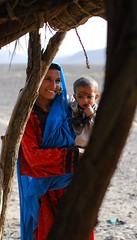

Wednesday, 9 July 2014
Scaling up Food Fortification in Pakistan: A Feasable Option
by Samar Zuberi
A recent food fortification scoping study endorses food
fortification strategies in Pakistan. The report was commissioned
by DFID Pakistan and conducted by MQSUN. Local analysis on effective means to
address micronutrient undernourishment or ‘hidden hunger’ is much needed. Over
half of Pakistan’s population of children under 5 suffer from anaemia and
vitamin A deficiency and 39% are zinc deficient. Half of non-pregnant mothers
are anaemic, and 42% are deficient in vitamin A and, the same percentage are
deficient in zinc (NNS 2011).
 |
| Photo Credit: Aga Khan University – Farheen Ayub Khan |
Tuesday, 13 May 2014
The beginning of a dialogue: Responsive agriculture-nutrition research
by Samar Zuberi

How can agriculture and food-related
policies and interventions be better designed to improve nutrition outcomes,
particularly for young women and girls? Dialogue around this question was
started at a workshop hosted by the Collective for Social Science Research /
Leveraging Agriculture for Nutrition in South Asia (LANSA) on 15 April in
Karachi. The workshop brought together diverse stakeholders in agriculture and
nutrition including senior officials from provincial governments, academic
researchers, representatives of international development partners, and civil
society organizations and activists.
Friday, 19 July 2013
Considering fragility: A disconnect between agriculture and nutrition
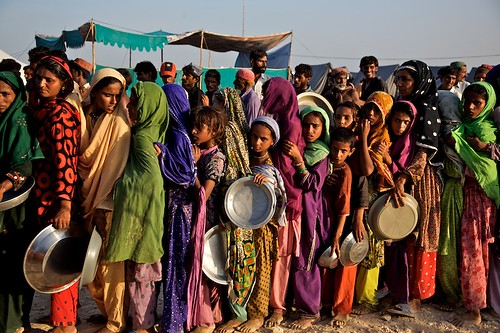

How can agriculture contribute more to
improving nutrition in countries like Pakistan (as well as others in South
Asia) where the sector continues to employ a large proportion of the workforce,
even while its contribution to national income undergoes decline? To find
answers to this question is the main objective of the Research Programme
Consortium Leveraging Agriculture for Nutrition in South Asia (LANSA).
The latest IDS Bulletin which focuses on nutrition in
Pakistan provided the perfect opportunity of showcasing emerging LANSA work on
the country. The evidence paper on Pakistan which I co-authored
with my colleague Mysbah Balagamwala at the Collective for Social Science
Research reviews existing evidence on the pathways and disconnects between
agriculture and nutrition using a framework developed for India by the research
programme TANDI (Tackling the Agriculture-Nutrition Disconnect in India). A
piece written on the article in the IDS Bulletin can be found here.
Subscribe to:
Posts (Atom)